

Sixty-two minutes in Austin: the argument in miniature
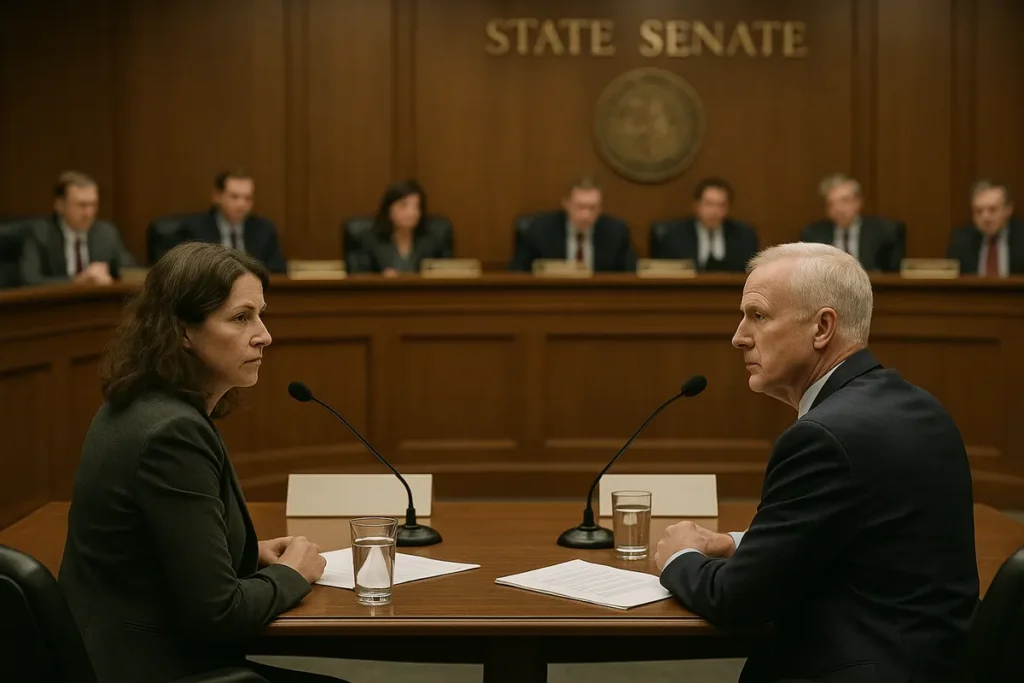
Two witnesses sat at the same table in the Texas Senate Committee on State Affairs and described the same product in incompatible terms. One called an event contract on the Dallas Cowboys beating the New York Giants a bet by another name. The other called it a federally regulated derivative, and warned lawmakers that squeezing it out would push Texans toward offshore sites. The hearing ran 62 minutes. It did not settle anything, and that is exactly why it works as a case study in prediction markets regulation.
The short version of the dispute: prediction markets sell tradeable yes/no contracts on future events under federal commodities law, while sportsbooks sell fixed-odds wagers under state gambling law. Regulators disagree about whether that structural difference is meaningful enough to change which rulebook applies. Below is a methodical way to work through the question, in the order the arguments actually stack up.
Step one: understand prediction markets vs sports betting structurally
A prediction market lists a binary contract on a defined outcome. Traders buy “yes” or “no” at a price between roughly 1 and 99 cents, and at settlement the winning side pays out $1 per contract while the other side is worth nothing. A 60-cent “yes” implies about a 60% chance of the event happening. The exchange matches buyers and sellers, charges fees, and does not take the other side of your position. You can also sell before settlement, so a contract can be exited at a profit or loss while the event is still in progress.
A sportsbook works differently. The operator sets the price, is the counterparty to every wager, and builds a margin (the overround) into the odds. Once the bet is accepted, the price is fixed. Cash-out features exist, but they are an operator-offered buyback, not a market of other participants.
| Feature | Prediction market (event contract) | Fixed-odds sports betting |
|---|---|---|
| Instrument | Binary contract settling at $1 or $0 | Wager at set odds |
| Counterparty | Other traders, via the exchange | The sportsbook |
| Pricing | Set by order flow; price implies probability | Set by the operator, plus margin |
| Exit before the result | Sell the position into the market | Operator cash-out, if offered |
| Operator revenue | Trading fees | Built-in margin on the odds |
| Primary regulator (US) | Federal: CFTC-designated exchanges | State gaming regulators, where legal |
Both carry a real risk of losing the money committed, and in both cases the intermediary takes a cut that works against participants over time. The structural differences are genuine, but they do not make either product a way to reliably profit.
Step two: read what actually happened at the Texas hearing
State Senator Bryan Hughes convened the hearing to examine how federally regulated derivatives markets interact with gambling that Texas prohibits. Sports wagering is illegal in the state, which is what makes the volume figures awkward for lawmakers.
The numbers were substantial. Trading on one Sunday NFL game between the Cowboys and Giants topped $208 million across US markets, according to figures from Aldrin Research, and Kalshi’s volume on that game exceeded any regular-season NFL game the prior year. For the Ohio State–Texas college football matchup on 12 September, tracking site Odds Shopper counted more than 50.7 million contracts traded. Research from Eilers & Krejcik Gaming published in April found that 43% of sports-event contract activity came from just two states: Texas and California. Both prohibit sports betting. A separate Texas-only breakout is not public.
The American Gaming Association’s position
AGA Vice President Tres York testified that an event contract on the Cowboys to beat the Giants is not fundamentally different from the same wager placed at a sportsbook. The trade group’s recommendation to Texas was direct: litigate. In practice that means the state asserting that offering sports-event contracts to Texans violates state law, and testing federal preemption in court rather than waiting for Washington.
Kalshi’s position
Robert DeNault, Kalshi’s head of enforcement and legal counsel, argued the exchange operates under federal oversight as a designated contract market, not as a gambling operator, and that demand exists whether or not Texas permits it. His framing to legislators was about substitution: block a regulated federal venue and activity migrates to unregulated offshore sites with no consumer protections and no reporting.
No legislation followed the hearing. The committee’s work reads as preparation for the state’s next session, and the outcome of the November races for governor, attorney general and US Senate will shape what Texas does with it. Lieutenant Governor Dan Patrick, a longstanding opponent of sports betting, controls much of what reaches the Senate floor.
Step three: separate the four arguments regulators are actually making
“Are prediction markets legal?” has no single answer right now, because the two sides are not arguing about the same thing. Pull the dispute apart and four distinct arguments appear, each with a counter.
| Argument | Gambling-classification view | Financial-instrument view |
|---|---|---|
| Economic substance | Risking money on a game’s result is a wager, whatever the wrapper | A binary contract is a derivative with a market price and a secondary market |
| Purpose | No hedging function in a football game; the purpose is entertainment | Prices aggregate information; participants may hedge exposure or trade views |
| Consumer risk | Needs gambling safeguards: age checks, self-exclusion, ad rules, integrity reporting | Exchange rules, surveillance and federal reporting cover market abuse |
| Jurisdiction | States hold police powers over gambling; the federal framework was not built for sports outcomes | Exclusive federal jurisdiction over listed derivatives preempts conflicting state law |
Notice that the integrity question cuts across both. Sports leagues and state regulators run insider-betting and match-fixing monitoring through licensed sportsbooks and data partners. A federal derivatives framework handles market manipulation, which is related but not identical. That gap is one of the more practical points raised against event contracts, and one operators answer by pointing to their own surveillance obligations.
Step four: place the CFTC correctly
The Commodity Futures Trading Commission oversees US derivatives markets under the Commodity Exchange Act. Exchanges that meet its requirements become designated contract markets and can list contracts, typically by self-certifying that a new product complies with the law rather than seeking pre-approval. The Act also contains a special provision for event contracts, allowing the CFTC to review and restrict contracts involving specified categories, including gaming and activity unlawful under state law, where listing them would be contrary to the public interest. Its reference material and rulemaking records are published at cftc.gov.
Three features of that setup create the jurisdictional tangle. First, CFTC oversight is market-conduct oversight: position limits, reporting, manipulation, clearing. It is not licensing designed around problem gambling, advertising standards or sports integrity. Second, the “contrary to the public interest” review is discretionary, so the same statute can be read as permitting sports-event contracts or as a basis for restricting them depending on how the agency and the courts apply it. Third, exclusive federal jurisdiction over listed derivatives is the legal hook exchanges use against state cease-and-desist orders, which is why several disputes have moved out of state administrative processes and into federal courts of appeal.
Until appellate rulings align or Congress legislates, prediction markets regulation stays split between a federal financial regulator and 50 state gambling regimes, with different definitions of the same activity.
Step five: track the consequences that are already visible
Skip the forecasting and look at what stated positions imply for each group.
- Licensed operators. Sportsbooks pay state licence fees, gaming taxes and compliance costs that event-contract exchanges do not, in states where they can operate at all. In prohibition states like Texas and California, they cannot compete for that volume, which is why the AGA pushes classification as gambling rather than product-by-product rules.
- Exchanges. Their operating model depends on the preemption argument holding. Adverse rulings mean state-by-state licensing, and with it the compliance obligations they currently sit outside.
- Traders and bettors. Protections differ by venue. A CFTC-regulated exchange is not the same environment as a state-licensed sportsbook with mandated deposit limits, self-exclusion registers and local dispute resolution. Anyone using event contracts on sports should know which safeguards apply to them and which do not.
- State legislators. Texas showed the sequence: hearing, evidence on volume, competing testimony, no immediate bill. Other prohibition states can follow the same route, either toward litigation or toward regulating sports betting to bring the activity onshore.
For context on how licensing frameworks handle these obligations, see our coverage of sports betting regulation and our wider iGaming compliance reporting.
Frequently asked questions
Are prediction markets gambling?
That is the disputed question, not a settled fact. State gambling regulators and the AGA argue that risking money on a sports result is a wager regardless of how the contract is structured. Exchanges argue a binary contract listed on a CFTC-designated market is a derivative under federal law. Courts and the CFTC are still resolving it.
Why do regulators clash over prediction markets?
Because two rulebooks plausibly apply. Federal commodities law gives the CFTC exclusive jurisdiction over listed derivatives; state law gives legislatures and gaming regulators authority over gambling. When the same product fits both descriptions, the conflict is about jurisdiction as much as consumer protection.
What is the difference between prediction markets and sports betting?
A prediction market contract is priced by other traders, settles at $1 or $0, and can be sold before the event ends. A sports bet is priced by the operator, who is your counterparty and builds a margin into the odds. The economic exposure can look similar; the mechanics and the regulator are not.
Did the Texas hearing change the law?
No. It was an examination by the Senate Committee on State Affairs, with testimony from the AGA and Kalshi, and it produced no legislation. It sets up how Texas evaluates the issue in its next session, with November’s statewide election results likely to influence the approach.
One practical note whichever venue you use: event contracts and sports bets both put real money at risk, and losses are the normal outcome for many participants. Set limits before you trade or bet, treat it as spending rather than income, and use the exclusion and cool-off tools your platform offers if it stops being entertainment.